Termite vs. Carpenter Ant: Which Wood-Destroying Pest Is Damaging Your Maryland Home?
A pile of wings on a windowsill or wood shavings beside the porch deserves a closer look. It does not tell you the whole story. Termites and carpenter ants can both concern homeowners, but their behavior and the evidence they leave are different.
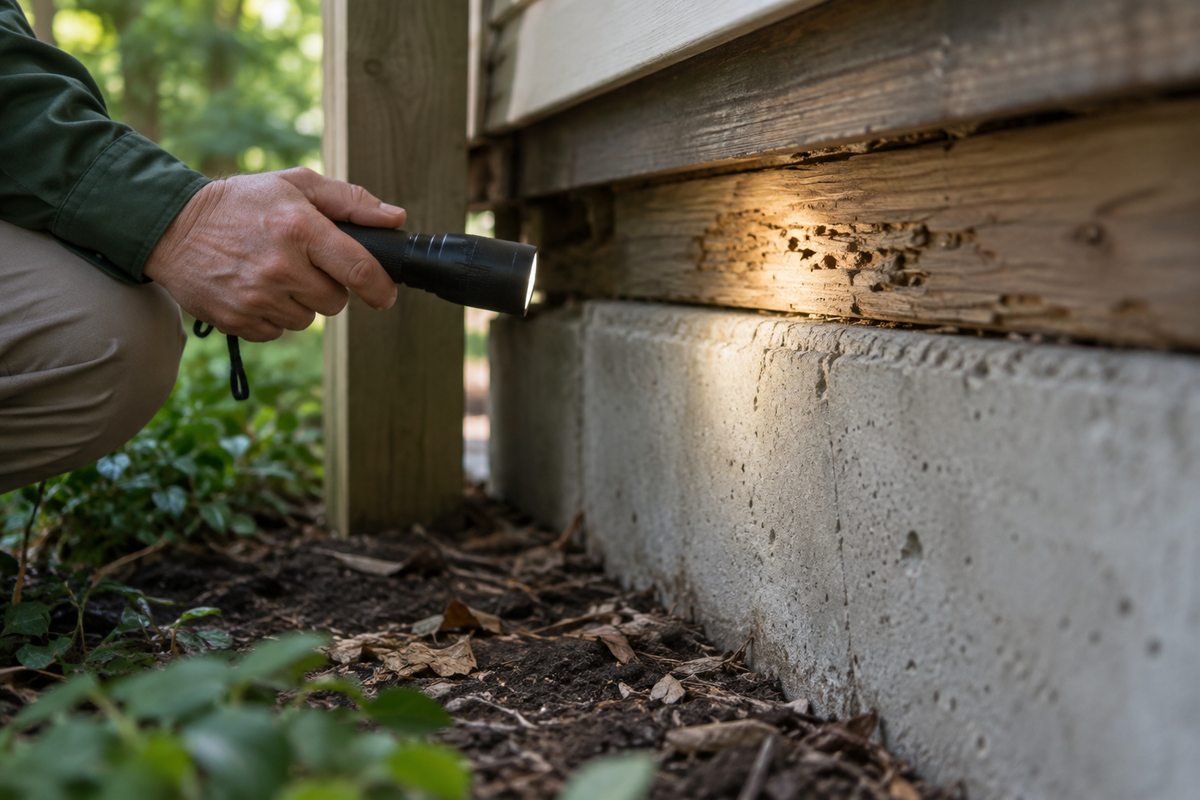
Illustrative service image.
Start with the insect, if you have one
Use a clear photograph or a safely collected dead specimen rather than relying on color alone. Both ants and termites can have winged forms. Body shape and wing size are better clues than deciding that every dark insect is an ant.
A winged ant has a narrow waist, bent antennae and front wings longer than the rear pair. A termite swarmer has a broader waist, straighter antennae and four wings of similar length. Tiny specimens can be hard to judge, so treat your comparison as a starting point for identification.
| Feature | Termite swarmer | Winged ant |
|---|---|---|
| Waist | Broad | Narrow |
| Antennae | Straighter | Bent |
| Wings | Similar lengths | Front pair longer |
The wood tells a different story
Termites feed on wood. Carpenter ants excavate spaces for nesting rather than eating the timber. Carpenter-ant debris may contain wood fragments and other material pushed from the nest. Moisture-damaged wood can make a site suitable, although finding ants does not tell you how much damage exists.
Maryland’s native termites are subterranean. Look for mud shelter tubes and soil associated with affected wood, not only a pile of dry pellets described in guides about drywood termites. Sawdust can also come from building work or other insects, so avoid diagnosing the problem from debris alone.
Spring swarms are a clue, not a damage measurement
Winged insects inside can be the first visible sign that needs investigation. Save the date, room and approximate number seen. Photograph shed wings before cleaning them away. An outdoor swarm does not prove your house is infested; indoor activity deserves a closer assessment.
Do not assume spraying the visible swarm resolves activity hidden elsewhere. The assessment needs to establish the insect and where it is coming from. That determines whether control, moisture repairs or further inspection are appropriate.
Check moisture without opening walls
Note leaking gutters, plumbing leaks, damp basement areas and timber close to soil. Tell the inspector about recurring wet spots and any previous pest treatment. Accessible photographs and repair records can help explain the history.
Do not cut open walls, crawl into unsafe spaces or break apart suspect timber to prove the point. Soft wood, sagging areas or other structural concerns may need a building professional as well as pest assessment. Treatment does not repair damaged framing.
What a useful inspection should answer
Ask what insect was identified, what evidence supports that finding, which areas were accessible and what could not be checked. Request a written description of active signs and the recommended scope. A finding in one area does not establish the condition of every concealed space.
Annual checks can be useful, especially after a termite problem or where an existing plan requires them. Agree the interval based on property risk, past activity and contract terms. Do not wait for the next scheduled visit if you notice new wings, tubes or damaged wood.
Keep the next decision clear
Compare proposed treatment methods, preparation, follow-up and any written coverage terms. Ask whether repairs, moisture work and inspections are included or separate. Avoid choosing a plan simply because the sales description sounds stronger.
If you are unsure whether you have termites or carpenter ants in Gaithersburg, call with the location and signs. Identification comes before choosing the treatment. That is the quickest route to a proposal aimed at the actual problem.
Your next steps
- Photograph wings, debris or tubes without disturbing them.
- Note leaks, damp wood and previous treatment history.
- Request identification before agreeing to treatment.
- Ask which areas the inspection could not reach.
- Confirm future inspection and repair responsibilities.