Spring Stinging Pests: When to Expect Wasps and Hornets in Montgomery County
One wasp checking the porch roof in spring does not mean a large nest is already there. It can be the start of a new colony, though. Knowing what to watch for helps you act before a nest sits beside a door your family uses every day.
Illustrative service image.
Spring starts with surviving queens
Many social wasps survive winter as fertilized queens in sheltered places. As the weather warms, queens become active and look for nest sites. The calendar is only a rough guide: a warm spell can bring activity earlier, while cool weather can delay it.
In Montgomery County, start watching sheltered exterior areas during spring rather than waiting for summer buzzing. You do not need to inspect a roof from a ladder. A brief look from a safe ground-level position is enough to notice repeated traffic.
How the season develops
Early in the season, a queen may be building a small nest and raising the first workers. As workers take over more tasks, a colony can grow through summer. Activity near a nest can become more noticeable as there are more insects coming and going.
A quiet-looking nest is not proof that it is empty. Weather, time of day and species affect visible activity. Avoid touching it to find out. A provider can assess its position and whether treatment is needed.
Paper wasps, yellowjackets and hornets differ
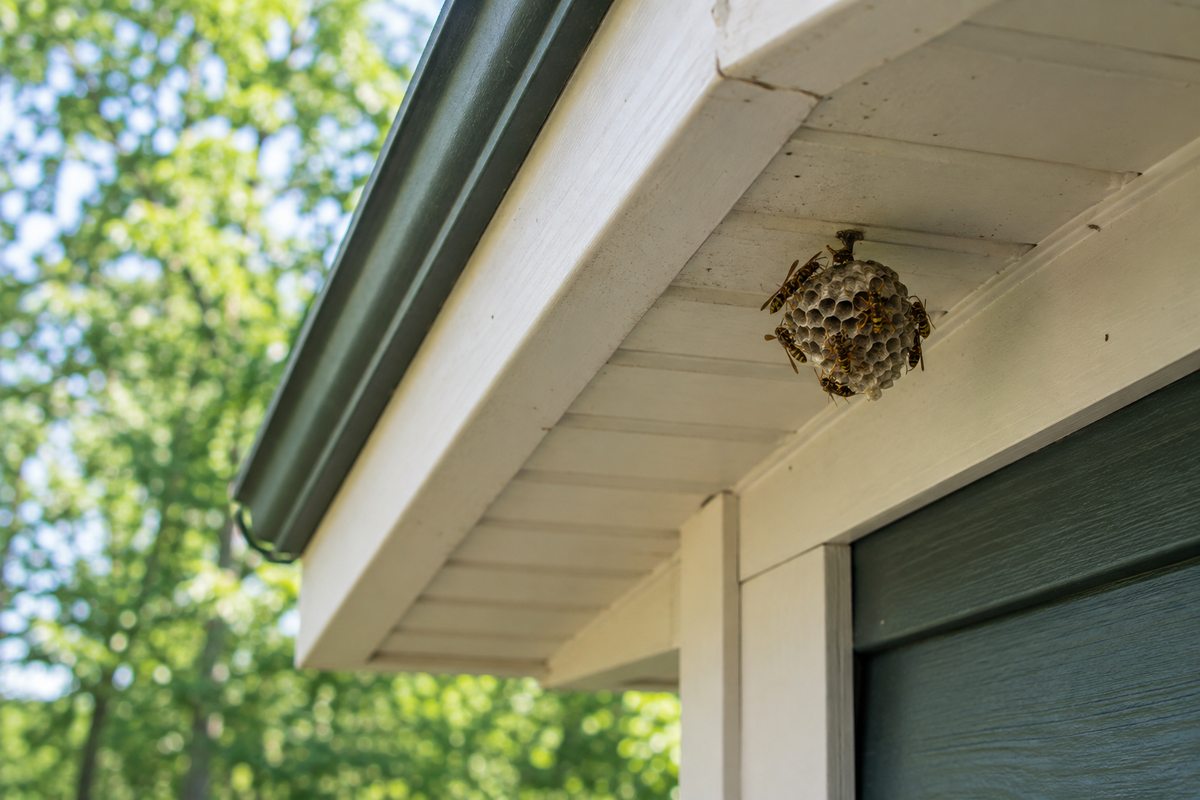
Paper wasps often build exposed combs beneath sheltered edges. Yellowjackets may use ground openings or concealed spaces. Bald-faced hornets make enclosed paper nests. Identification matters because a nest hidden in a wall needs a different assessment from a small exposed comb.
Paper wasps are not always aggressive when away from their nest, but they can sting when disturbed. Wasps also catch other insects and have a role outdoors. A distant nest away from people may be assessed differently from one above a front step.
Places to watch around the house
From a safe distance, look beneath porch covers, roof edges and deck structures. Notice repeated flight into one crack, a new paper comb or steady traffic through a hole in the lawn. Keep people and pets away from that area.
Do not seal an opening while insects are entering a wall. Do not poke a nest, cut a supporting branch or pressure-wash it. These actions can disturb the colony and complicate access. If a nest blocks the usual entrance, use another route where possible.
Why a spray can turn into a bigger problem
A store-bought spray is not a safe answer for every nest. Reaching overhead, standing on a ladder or treating a concealed nest adds risks beyond the product itself. Spray drift can also reach people, pets or surfaces you did not intend to treat.
Follow the product label if using any pesticide. Do not mix products or improvise a stronger dose. A nest near daily foot traffic, at height, inside a building or beyond clear identification is a sensible reason to seek professional assessment rather than experiment.
What to tell a removal provider
Share the nest location, approximate size, whether it is visible and how close it is to doors or seating. Send a photograph only if you can take it without approaching. Mention household sting allergies so access and precautions can be discussed.
Ask whether the proposal covers treatment, physical removal and follow-up; those tasks are not always the same. For a nest around your Gaithersburg porch or deck, call to discuss access and current availability.
Your next steps
- Watch spring flight paths from a safe distance.
- Keep clear of nests near doors or seating.
- Avoid ladders, probing nests or sealing active wall openings.
- Share the location and a safely taken photo with the provider.
- Confirm treatment, removal and follow-up scope.